A bleak existence with many hours spent watching daytime television in enforced idleness.Chief Inspector of Prisons, HMYOI Feltham A Inspection Report
Should we be locking up fewer children? I don’t know for sure (we plan to find out), but my inkling is that most people in this country don’t want to see children kept in their cells for 20 hours a day, missing out on education and living a ‘bleak existence’.

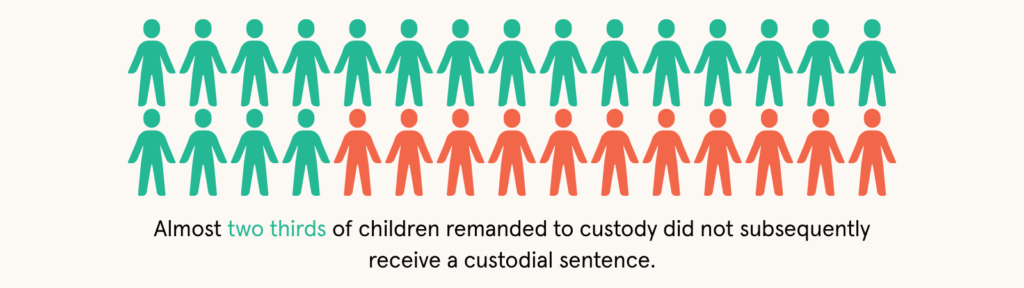
When people think of children in prison, they tend to imagine children serving a prison sentence for a serious crime. But almost half of the children in prison have not even been convicted or sentenced – they are on remand, awaiting their trial. We have long been concerned that the use of remand for children awaiting trial is too high – especially because most of these children end up not getting a prison sentence.
A few years ago, the then Conservative government also agreed that we should be remanding fewer children. They raised the legal threshold for remanding a child to custody, hoping that this would reduce its use. It did, but only a little bit. Since the law changed in 2022, the average number of children on remand in custody has dropped about 8%. Many in the sector, and the government, hoped for more. Why didn’t we see a greater reduction in the use of remand for children following the law change?
Transform Justice is embarking on a three-year project, funded and in partnership with the Co-op Foundation, to investigate why the use of custodial remand for children is still so high, and what practically can be done to reduce it. We have many hypotheses already, based on our previous work in this area, including:

There’s a lot we already know. Almost a fifth of remands last for a week or less – indicating that lack of time to produce a good bail package for the first hearing is a problem. We also found that adult magistrates’ courts are 50% more likely to remand children to custody than the youth magistrates’ court. Part of the answer therefore might be improving judicial confidence in alternatives to bail in non-youth courts.

We’ve launched a practitioner survey to hear from those who work with children facing remand. We want to find out why children are actually being remanded, what is blocking greater use of community alternatives, and what good practice already exists that we might learn from. The survey is aimed at youth justice service staff and defence lawyers who represent children facing remand, but if you work in courts with children facing remand we would love to hear from you too.
Transform Justice believes that the use of custodial remand for children can be reduced, that there are ways to achieve this that are not particularly radical or dependent on a huge injection of cash, and that a lot of good practice already exists that is ripe for sharing. The findings from this survey will inform a good practice guide and a series of regional events for youth justice practitioners and stakeholders we are planning for next year. Please do complete the survey here and tell us your experiences.
We want to hear your views on the use of custodial remand for children