

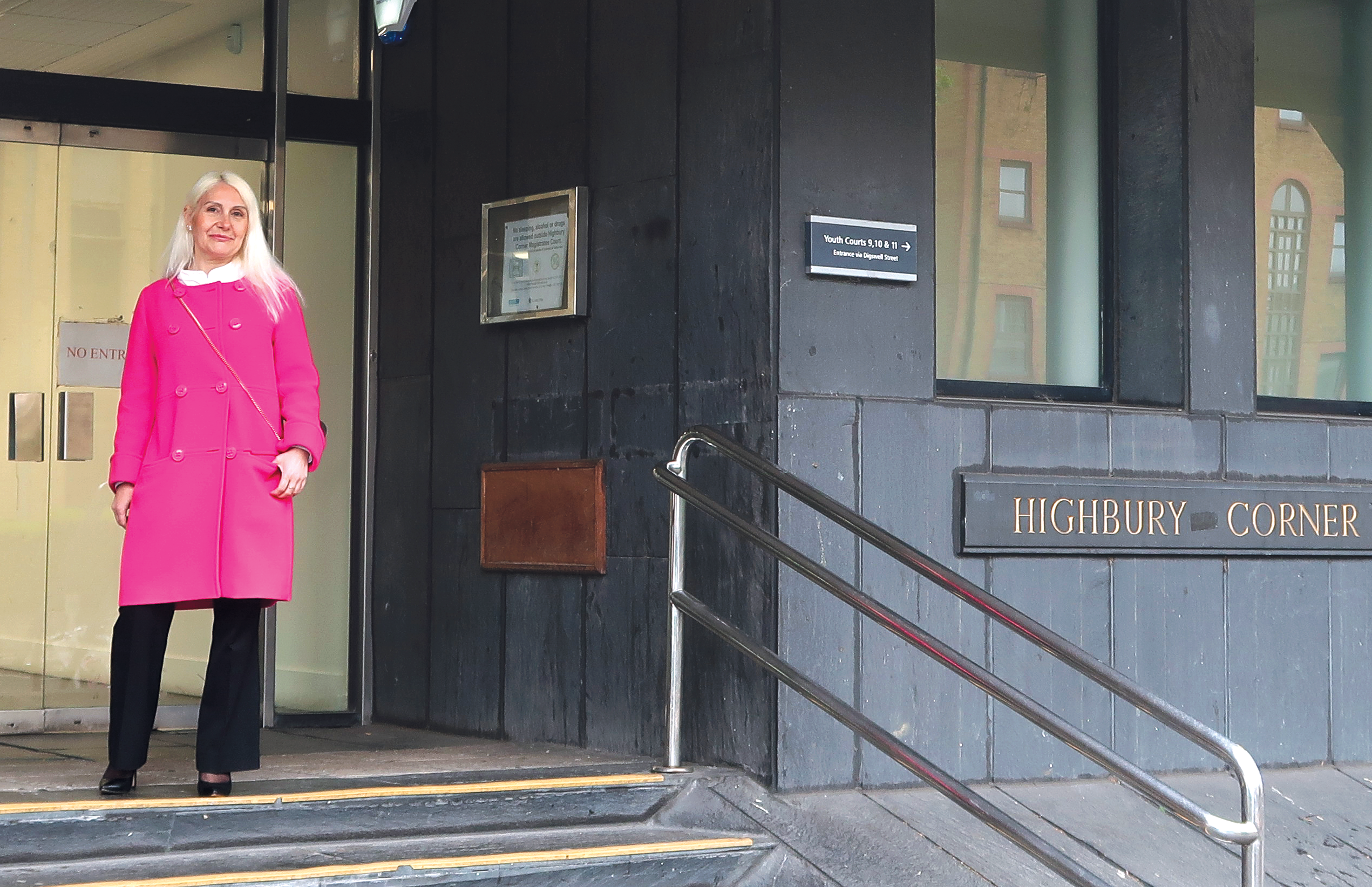
To see how our sons and, yes, daughters may be treated in the magistrates’ court is an eye opener. I am grateful to receive the chance to record proceedings...and perhaps diminish the risk of unfairness.Courtwatcher
How are young adults treated in the magistrates’ courts? How, if at all, is their maturity considered and taken into account by the court? This report seeks to answer these questions, based on testimony from 82 courtwatchers, volunteer members of the public who observed London magistrates’ courts for six months in the second half of 2023.
Sentencing Council guidelines recognise the potential impact of young adults’ developing maturity on their responsibility for an offence, their ability to cope with a prison or community sentence, and their capacity to participate effectively in court proceedings.
Courtwatchers observed almost 200 hearings involving a young adult defendant. They reported that maturity was mentioned in less than a third of hearings observed. When maturity was raised, it usually wasn’t covered in depth, rather “mentioned as an aside, no specific arguments made.” Some maturity arguments applied specifically to the offence or defendant: on the young adult’s susceptibility to peer pressure, their difficulties assessing risk, the potential impact of a court sanction on their education or employment, and their potential for rehabilitation. But these were few and far between.
When mentioned, arguments about maturity did sometimes prompt the court to reduce the severity of the sentence given, or at least to postpone sentencing until they had more information about the defendant. But most of the time, comments about maturity were dismissed by court decision makers or deprioritised compared to other factors. Courtwatchers observed young adults being treated much the same as older defendants, with little direct engagement with young adult defendants, frequent use of the secure dock and challenges arranging interpreters.
This report sets out recommendations for how the courts can deal with young adult defendants more effectively by considering maturity more thoroughly.
We’ve known for almost twenty years that the human brain does not fully develop until people are in their mid-twenties. But for the most part, the criminal justice system still treats an 18-year-old in the same way as a 50-year-old.
This significant report sheds light on what happens to the youngest people to appear in adult magistrates’ courts, those who are 18-25 years old. Children under 18 are dealt with in a specialist youth court but there are no special courts for young adults. There’s a strong case for adopting a distinct approach for this age group, as, in the words of one defence lawyer quoted in the report, a young adult has an opportunity “to restart his life.”
To reflect this, in reaching decisions about young adults, magistrates (and judges) have been encouraged to take their stage of psychological development into account. The courtwatchers found that lack of maturity was mentioned – by prosecutors, defence lawyers or the bench – in fewer than a third of young adult cases they saw.
Where maturity was considered, in some cases a less severe sentence was imposed or bail granted. The findings imply that a more systematic consideration of the developmental status of young adults could reduce further the numbers sent to prison and help put in place measures to assist them to stay out of trouble. These are much needed given the prevalence of mental health and substance misuse problems among the young adults observed.
More fundamentally, such consideration would also help ensure that necessary adjustments are made for young adults to participate fully in court proceedings, to understand what’s going on and to have their say.
The report makes sensible recommendations for improving practice with young people in the adult court. For me it raises the question of the need for more structural reform. The juvenile court was created in 1908, with 17 year olds included in the refashioned youth court in 1991. Is it time to consider raising the upper age limit once again?
ROB ALLEN
Independent researcher, former chair of T2A and author of Young adults on Remand – A Scoping Study
There is a growing consensus that the criminal justice system should treat young adults (18-25 year olds) differently from older adults. Evidence shows that our brains continue to develop into young adulthood, impacting our appetite for risk, impulse control, susceptibility to peer pressure, and ability to evaluate the consequences of our actions. Lower maturity can also influence the effectiveness and impact of certain criminal justice sentences, and how a person presents in court.
The Sentencing Council’s general guideline on age and/or lack of maturity recognises the potential impact of low maturity on a person’s responsibility for an offence and their ability to cope with a prison or community sentence and says that this “may justify a reduction in the sentence.”
In 2021 the Magistrates’ Association concluded, based on research with magistrates, that maturity was not raised often in the magistrates’ court and, when it was, it was usually at the sentencing stage. Magistrates said that they need to know about a defendant’s maturity at the first hearing, or at the very least before a trial, so that they can ensure the young adult defendant can participate effectively. They recommended that independent assessments on maturity needed to be carried out ahead of a first hearing, and that magistrates should be trained to understand maturity and its implications for the court process and court decision making.
This project set out to find out the extent to which the maturity of young adult defendants is raised and considered in the magistrates’ court, both in terms of how young adults are treated and the courts’ decision making. To do this, Transform Justice set up a court observation programme where members of the community (courtwatchers) observed daily hearings in magistrates’ courts and reported what they saw.
“To see how our sons and, yes, daughters may be treated in the magistrates’ court is an eye opener. I am grateful to receive the chance to record proceedings, to highlight good practice, & perhaps to diminish the risk of unfairness”
Our 82 courtwatchers were volunteer members of the public recruited via social media, local volunteer websites, local press, e-newsletters, and flyers in public spaces around three focus magistrates’ courts.
Before beginning courtwatching, volunteers completed our two-part training: a three-hour in person session covering the project aims, an introduction to the magistrates’ court and the courtwatcher role; followed by a 90-minute online session explaining the data collection forms and how to upload notes. See appendix 1 for more details about the training sessions.
Courtwatchers were given blank forms to record information for each hearing they observed. The forms were completed by hand, with courtwatchers uploading the data online later via Google Forms. The forms comprised a series of closed questions capturing details about the magistrates or district judge, the defendant and the hearing, as well as a space for free-form reflections from the courtwatchers. Courtwatchers also captured details about whether maturity was mentioned, the nature of any comments relating to maturity and any evidence of the impact of those comments.
Except for defendants’ ages (year of birth is mentioned at the start of each hearing), the data gathered on defendant and bench demographic characteristics (gender, age, ethnicity and first language) is based on courtwatchers’ perceptions.
FIGURE 1:Number of hearings observed by court
Courtwatchers were free to visit magistrates’ courts at a time that suited them. Volunteers were initially encouraged to attend our three focus magistrates’ courts (Highbury Corner, Croydon and Thames) but then were welcome to branch out to other London magistrates’ courts once they became more familiar with the process. The courtwatching phase ran from late July 2023 until 31 December 2023.
Most of the quotes in this report are taken from the data submitted in courtwatcher observation forms. A small number of quotes are taken from email or WhatsApp messages from courtwatchers and from facilitated discussions at a courtwatcher in-person event in January.
FIGURE 2: Who are our courtwatchers?
FIGURE 3: Young adult defendant demographics as perceived by
courtwatchers
FIGURE 4: District judge (DJ) and magistrate (mags) demographics as
perceived by courtwatchers
Thanks to the 82 courtwatchers who volunteered to attend magistrates’ courts and took the time to send us the detailed, thoughtful observations that have allowed us to produce this report. Thanks to Mark Yin and Samantha Burns for their support processing and analysing the observation data, Jenny Thomas from Statisticians for Society who provided pro bono quantitative analysis advice, and Claire Ely from Centre for Justice Innovation for providing feedback on a draft of this report. Finally thank you to the magistrates’ court staff for accommodating our courtwatchers during their visits.
This project has been kindly supported by the Barrow Cadbury Trust under the Transition to Adulthood programme
For each hearing involving a young adult defendant, courtwatchers noted down if maturity was mentioned by anyone in the court. If it was, volunteers wrote down what the comments related to and the impact, if any, they thought it had on the court’s behaviour and decision making.
Courtwatchers reported that maturity or age was mentioned in less than a third (61) of hearings (n=195). For two thirds of the hearings (126), courtwatchers reported that age or maturity was not mentioned. In the remaining eight hearings, the courtwatcher was not sure if maturity was mentioned. Maturity was mentioned most frequently in sentencing hearings: of the 49 sentencing hearings observed, maturity was mentioned in 20 cases. This is unsurprising given sentencing hearings are when defence lawyers raise mitigating factors such as developing maturity.
Maturity was mentioned least often in hearings featuring a bail/remand decision, where it was mentioned in only 9 out of 42 hearings. Maturity was mentioned in 6 out of 18 trials, and 26 out of 84 hearings where defendants were pleading guilty/not guilty.
This means that young adult defendants’ maturity was usually not explicitly mentioned or considered by the court.
“Nobody appeared to notice maturity, I don’t believe it was considered, it was not mentioned.”
“I found it puzzling that the defendant’s age wasn’t used in the defence strategy. He was clearly young and quite scared in the dock.”
The absence of maturity in court discussions did not appear to be due to lack of time or familiarity with the defendant. Volunteers noted that other contextual factors were often raised when maturity was not. These included mental health conditions, drug or alcohol issues, the defendant’s dependents, employment or asylum status.
“While the defendant’s alcoholism and mental health issues were swiftly mentioned, his maturity was not explicitly mentioned, and the relationship this could have with his issues or rehabilitation were not explicitly factored in.”
“Although he was only 18, the defendant’s maturity was not mentioned – although his asylum status was.”
“The defendant’s age was not mentioned, but the judge asked her a lot of questions about her work (she had been a carer) and seemed sympathetic to the fact a criminal record would disrupt this.”
“Maturity wasn’t really mentioned, however, other circumstances were, like the fact that she is a single mother of a 4yo and that her mother had a stroke.”
One volunteer who had observed many hearings thought that maturity was only raised when the defendant was in the lower end of the young adult age range: “The defendant was 22. So far in my observations I have found that maturity is only mentioned if the defendant is 18 or 19, it does not seem to be considered for those 20 and over.” But being a very young adult didn’t always make a difference: “His maturity did not appear to be taken into consideration, i.e. that he was only 18.”
Others wondered if the seriousness of the offence made a difference to whether maturity was mentioned: “No special considerations regarding age seemed to have been taken into account during this hearing. I believe that the seriousness of the offence (taking indecent images of a child) was the main reason why such considerations were not mentioned,” and “Not considered – serious drugs charge and so seemed to be treated like adult.” Some suggested that maturity was not raised because the case was going to be moved to the Crown Court: “This was a plea and bail hearing with the case being sent to the Crown Court for trial and sentencing. I imagine this issue will be raised by his defence counsel at that point.”
In the instances where maturity was mentioned, courtwatchers were asked to note down what was said. They could select one or more from several options and provide further details in a textbox at the end of the form.
Often when maturity was mentioned, it was not covered in depth, or was put forward as one factor of many.
“It seemed to me that the defence advocate had raised the defendant’s age and maturity because he ticked that particular mitigation box without actually considering the case as a whole.”
“The age, his early guilty plea, his remorse and the fact that this was his first time before the adult courts and potential for impact on future employability were all raised during mitigation.”
“The judge just said, ‘we need to be aware of his relative youth’ and asked if there was family support.”
FIGURE 5: What did the maturity comments relate to? (n=61)
In some circumstances, maturity was discussed in more detail, including:
In this case, a young Romanian man had been charged with stealing over £1,000 of alcohol from a supermarket. The prosecutor made a detailed case for taking the young adult’s developing maturity into account: “The prosecutor used a report on the precarious position of young adults in society, especially emphasising the ineffectiveness of viewing them as adults as soon as they turn 18. Using the research, he emphasised the growth still needed and urged leniency.” However, the courtwatcher reflected that the argument was maybe made too late to be effective: “I did feel that the prosecutor’s introduction of a research report was not explored fully. This may be because the report was introduced during the trial, therefore not offering enough time to process. I wonder if there might be a more effective way to introduce academic research that may help the experience of young adults in magistrates’ court.”
When maturity was mentioned, courtwatchers noted down what impact they thought it had on the court’s behaviour or decision making. They could select one or more of the options below and expand on their response further in the text box at the end of the form.
FIGURE 6: What difference did maturity comments make? (n=61)
Often, courtwatchers found it difficult to judge whether comments about a defendant’s maturity made a difference. Some courtwatchers provided details of hearings where they felt the young adult’s maturity was overlooked or dismissed.
“The lawyer mentioned that he was immature for his age but this was disregarded by judge.”
“I did not feel magistrates felt convinced about argument on defendant maturity. They took more interest in doctor’s report on depression and defendant being his mother’s carer.”
In the case of a young woman who had failed to attend her previous court hearing, a reference to her “naivety” by the defence lawyer was ignored: “Judge completely dismissed this submission and it had no impact on his final decision. He said this wasn’t a good enough reason for not complying and she could have made more of an effort to get to court on time.”
One courtwatcher observed the hearing of two defendants charged with phone theft under joint enterprise (where someone can be jointly convicted of a crime if the court decides they assisted or encouraged someone else to commit it). One defendant was 28 years old and one was 18. The volunteer was concerned by how little the young adult’s maturity was considered: “The 18-year-old’s bail conditions were the same as the 28 year old. Even though his defence reminded the court he would/could find it hard with the distractions of youth to keep to the conditions, I feel this information wasn’t absorbed/noted. The lad looked dishevelled and I wondered why/if he had been offered the chance to not present in that way. No questions why what happened, happened. Little interest other than to set bail and give date for trial. So for all we know, the older man could well be coercing the younger man, so to have them seen together added up to lack of care for the young man, in my view.”
One young man charged with stealing a credit card from a handbag was homeless and had recently been beaten up: “The lawyer mentioned that he was alone in the country without family and does not qualify for benefits. He was living on the street where he had been attacked. He had been in hospital for two days due to injury and was on heavy medication. The judge asked if he was seeking asylum; the lawyer said that she could not answer but that his residency application was ongoing and that he was in extreme financial difficulty. Judge said that others manage in the same situation without resorting to theft and that he seemed unable to stop stealing. The lawyer mentioned that he was immature for his age but this was disregarded by judge.” The young man was given a 16-week prison sentence.
In one hearing, a young man was charged with “assault by beating” of two police officers after becoming involved in a shop fracas which then escalated. He was alleged to have pushed one officer repeatedly and kicked the other in the face while struggling to free himself. The courtwatcher noted the various challenges facing the young man: “What struck me most about this defendant was his apparent vulnerability. The family were made homeless, he moved to London to live with his dad with whom he does not have a good relationship. He has since been asked to leave his dad’s home and is living with his grandmother who seems to have dementia and be living in supported housing. I imagine he must feel really quite isolated.”
The young man had pleaded guilty and was there for his sentencing hearing. The first hearing was adjourned pending a report from probation. When the case resumed that afternoon, probation stated that the defendant regretted what had happened, that the kick was not deliberate, and that no significant injury was caused. The probation report “also mentioned possible dyslexia and issues with mood and back pain for which he is self-medicating with cannabis.” However, maturity was “only mentioned briefly by probation when discussing risk of reoffending (potentially increased risk but according to probation, risk low).” They asked for a compensation order “so as not to impede the gaining of future employment” but the district judge “felt the seriousness of the offence would not allow for this.” The young man was given a community order including 80 hours of unpaid work, and a requirement to pay £250 to the police officers in compensation.
In fifteen hearings, courtwatchers felt the comments on maturity contributed to a reduction in sentence length or severity. And in some instances the young adult was given bail rather than remanded.
“The bench was very considerate when defining an appropriate sentence [for possession of indecent images] and all elements were considered, young age of the defendant and the fact that it had been a long wait since he was first arrested and the impact it had on his mental health. They also considered elements like social isolation, inability to work, mental health problems. Due to his young age, the sentence was focusing on rehabilitation [a community order with 26 days of participation in a behaviour change programme].”
“The defendant was granted unconditional bail as the offence [possession and supply of cannabis] took place around 3 years ago, implying that he has matured since. The case was also adjourned so that the probation officer could conduct an interview to identify the ‘root causes’ of the defendant’s offence and factor this into a new report.” “Maturity was considered and it was swiftly decided that the young adult’s offence [two assault charges and one affray] would be treated with leniency [a fine]…The charge of affray was also ignored due to a combination of age and good character.”
“Both the defence and prosecution agreed that due to the defendant’s age (19) and no previous offences that the matter should be referred back to the police and he should be cautioned instead.”
“The defendant was 18 and accused of throwing a coin at a football match. It had been suggested that he should be banned from attending matches, however his job in hospitality required him to attend matches, so that outcome would leave him without a job. It seemed like neither side had had time to fully review the case and they decided due to his age and the effect of him being banned they needed more time.”
Some cases were adjourned to gather more information after the issue of maturity was raised. Of the 186 hearings where an outcome was recorded, 22% (41) ended with an adjournment. Pre-sentence reports, written by probation and provided after conviction but before sentencing, are the main source of information on the defendant for the magistrates and judges. The pre-sentence report should include an assessment of the defendant’s maturity, how this might relate to the offence, and how this might be considered in sentencing.
Some magistrates seemed to recognise the impact of the court’s decisions on a young person’s life – one bench asked for a probation report “with a view to providing help to avoid reoffending,” another “didn’t want to to make a quick decision that could seriously affect the defendant’s situation.”
“The case was adjourned for three weeks so a pre-sentence report could be prepared. The possible penalties were a community order or prison sentence, I think the judge didn’t want to impose a sentence without further information. He had already been given a community order and had breached it, so she was reluctant to give another one. The judge wanted input from probation on what the recommended sentence should be. I thought this was a sensible thing to do.”
In one sentencing hearing observed by a courtwatcher, the defendant was a young man with no prior convictions. The courtwatcher noted that his maturity was not mentioned, but sentencing was adjourned to give probation time to determine which programme would be appropriate as a suitable sentence. According to the courtwatcher, the probation officer “assumed the defendant would benefit from one of the programmes provided but was unsure which.” The young man was allowed to leave court on conditional bail in the meantime.
Courtwatchers witnessed several hearings involving young adults where family members were present. Although not explicitly related to maturity, volunteers felt that the presence of family members positively influenced magistrates’ and judges’ decision making.
“His mother was there which made the magistrates softer.”
“The defendant’s father was present. The defendant still lived with his father thus the judge and the defence believed he was more likely to comply and not to commit further offences.”
“The judge did praise his parents and relatives for turning up to support the defendant in court as the judge mentioned that does not happen very often.”
Courtwatchers were also struck by the difficulties facing young adult defendants who were there without support.
“Nobody with this young adult in the court room, family etc. Felt like he has no support from either the system or family/friends etc.”
“Defendant looked dreadful. I’m quite sure he was crying. He was just let go with a parcel of his things and I happened to see him outside in the waiting area and he did not seem to know what to do or where to go or which was the way out. Seemed like he needed someone to help him.”
Parents or guardians are required to attend in the youth court but not in the adult magistrates’ court. Given the support family members can provide to young adults, and the potential impact of their presence on the court’s decision making, campaigners have advocated for courts to encourage family members to accompany young adult defendants.
Another CourtWatch London report, which summarises courtwatcher observations of all hearings including older adults, highlights that many defendants are prevented from effectively participating in the court process.
Young adult defendants who are less mature find it particularly difficult to understand and engage in the court process. Courts should therefore recognise the lower maturity of young adult defendants and adjust their communication accordingly.
Courtwatchers were on the lookout for how, if at all, courts adapted their communication when the defendant was a young adult.
Many of the young adult defendants observed were dealing with mental health conditions or issues with drug or alcohol use. Some had come to London from abroad and were experiencing severe isolation and absence of positive social relationships. One young man was trafficked into the country at 15 and pleaded guilty to bank card theft.
“A bit of a lost young man given flat and apprenticeship course but away from his contacts/support in Croydon and returns and smokes weed and drinks with them and now resorted to stealing. Hopefully will get drug and alcohol support and probation’s services to help him. His bond with his friends in Croydon appears deep, because they have been through the same experiences and trauma of being trafficked through many countries, and now find themselves alone here as youngsters, with no family or guidance. Therefore difficult for him to recreate himself somewhere else.”
Courtwatchers observed that young adults were treated much the same as older defendants by courts, with measures rarely taken to support them to participate most effectively.
“It appeared that this defendant was treated no differently than the various defendants (all evidently older than 26) whose hearings I witnessed both before and after hers.”
“It seemed the defendant’s age did not change the way in which proceedings were conducted.”
Others reported magistrates and district judges hardly engaging with defendants during the process.
“The DJ [district judge] barely spoke to the defendant except right at the end when she explained her decision. If I were him I’d have felt I was watching something going on before my eyes that was going to have a major impact on my life (it was possible he would come out with a custodial sentence) but that did not speak directly to me. I’d also have struggled to follow or understand what was going on.”
“Although the DJ didn’t address the defendant at all during the hearing, she did ask him at the end if there was anything he’d not understood or if he had any questions. I think leaving this right to the end makes it very unlikely anyone would raise anything!”
In some instances, the young defendants seemed not to understand what was happening.
“Defendant seemed confused about what the outcome was, although it had been carefully explained to him.”
Immature young adults may present differently than older adults in court. For example, difficulty regulating emotions may make them feel or appear angry during the court process. In one case, such behaviour was used against the defendant by the prosecutor: “A highly charged hearing with several interruptions from the dock with the defendant becoming angry when hearing the offences being presented to the court…The defendant was using offensive language and increasingly becoming angry which the prosecutor used to their advantage to demonstrate how quickly the defendant became angry which corroborates the charges being brought against him.”
Courtwatchers also noted magistrates and court professionals acting kindly towards young adult defendants, or being supportive and encouraging.
“Frightened young man was treated with courtesy and kindness by the chair of the bench and by court officials.”
“It felt positive that the young man was complying with order and was getting some recognition and encouragement for doing so.”
In the vast majority of hearings, defendants sat in a secure dock, a small ‘room’ with Perspex panels which physically separates them from the rest of the courtroom. The dock should only be used for the most serious cases, where the defendant is considered a risk to the safety of others in the court, but is now used as the default. Courtwatchers reported that young adult defendants were in the secure dock for 83% of cases observed.
The secure dock was used more often for young adult defendants than for older adult defendants (77%).
Campaigners, including Transform Justice, argue that the use of the secure dock impacts upon a defendant’s right to a fair trial, including their ability to participate in the hearing.
Courtwatchers’ comments reflected these concerns: “the defendant in the dock was not clearly heard.” Immaturity can make it more difficult for young adults to understand and engage in the court process, so courts should guard against the use of the secure dock for them.
Courtwatchers did observe a few cases where the magistrates or district judge allowed the young adult to sit with their lawyer or family members.
“The young adult was spoken to often and had his legal representative with him and allowed to confer often during the proceedings.”
“The judge made a point of mentioning how young the defendant was and allowed her father to sit next to her in the court room.”
“The defendant was originally in the dock but the lead magistrate said there was no need for this and asked her to come into main court.”
Courtwatchers noted down whether they thought the young adult defendant’s first language was English. Based on courtwatcher perceptions, a small proportion of young adult hearings involved a defendant who did not speak English as a first language (31 out of 189 hearings). Sometimes an interpreter was provided, or the case was adjourned until one could be arranged. But this didn’t always work well.
In one case, a young adult was facing serious charges for death by dangerous driving. The Crown Prosecution Service and magistrates were engaged in a long discussion about whether the case could go ahead. They eventually decided to adjourn the case for a month. The courtwatcher felt the defendant was not able to properly participate in this discussion: “This took a while to decide on, and I do not feel that the defendant was part of proceedings beyond confirming his name, DOB and address. Everything moved too quickly for someone who did not speak English, and therefore the onus was on the interpreter and the defence to explain afterwards.”
Although the outcome of the hearing was an adjournment, the hearing should still have been conducted at a pace at which the interpreter could relay what was happening to the defendant in real time, to allow him to understand and input as appropriate.
In another case, the court decided to adjourn a case in order to arrange an interpreter. However, even communicating this to the defendant was difficult. The court resorted to using an online translation tool.
“The defendant was advised through Google Translate. The adjournment was for a week. The court did their best under the circumstances to communicate but it is clear that a lack of interpreter is a recurring problem that could snowball into bigger issues like missed attendance.”
Only 3% of young adult defendants appeared on video link. This is positive given reports from courtwatchers highlighting how difficult it is for defendants of all ages to participate effectively by video link. However, there were still problems. In one hearing, the young adult defendant appeared on video while everyone else, including his defence lawyer, was in the courtroom. The defendant and his lawyer needed to discuss something. Rather than adjourn the hearing, the conversation took place over the video link in open court: “The defendant and the duty solicitor had to confer over the video link in front of the prosecution, court officials and me.”
In another video link hearing, the video link impeded the courtwatcher’s ability to see: “At times the defendant could not be seen properly via his camera. The angle meant only his hair was visible for a majority of the case.”
Women represent a small proportion of defendants in the magistrates’ courts; our courtwatchers only observed 16 hearings involving a young woman defendant. As the number of hearings involving young women defendants is small, the conclusions that can be drawn from the observations are limited.
Five of the sixteen young women defendants observed were charged with assaulting a police officer, technically referred to as ‘assault of an emergency worker’. Transform Justice has published research into the effect of introducing the ‘assault of emergency worker’ offence and of quadrupling of the maximum custodial sentence for it. The research found that the push for prosecuting these cases was sweeping more people with mental health conditions into the criminal justice system.
Testimony from courtwatchers indicates that those concerns were justified. One young woman had been charged with assault emergency worker after the “police had broken into her hotel room where she had been asleep. She had lashed out at them but not injured anyone.” The courtwatcher observing was surprised the defence lawyer in the case did not raise the self defence argument.
Another woman charged with assault of a police officer had mental health problems which were not mentioned by the defence: “medication for her mental health problems (depression, anxiety) were not included in the case information — judge asked why this was the case and I wonder whether this would have had an impact on the hearing.” The severity of the offence was also questioned by the courtwatcher: “The judge described the crime as ‘serious’ but the police officer testified to say it was a very light push.”
Women face specific challenges in the criminal justice system. Young women are more likely to be in trouble with the law because of vulnerabilities and risks they face, rather than the severity of their offending. Young women with experience of care are particularly overrepresented in the criminal justice system.
Courts were observed making efforts to support vulnerable young women, but sometimes seemed to come up against logistical challenges when doing so.
“I felt that there had been some disorganisation/bad communication among the different services regarding the defendant’s situation. After she had been given conditional bail for the assault, accommodation was supposed to be arranged for her, but it had not, hence why she had slept on the street for a few nights. There was also confusion over contacting mental health services (the defendant suffered delusions and was on medication), as they were the ones who arranged accommodation. At first it was said that they were not responding, then it was said that the defendant first had to agree to be referred to mental health services in order for them to help her (which she did). The case was adjourned until the next day so that all of this could be sorted out, which I thought was sensible.”
“The defendant was 20, she had been given a bail condition that essentially made her homeless, as she could not contact or stay with her mother. The judge was concerned that she was a young woman who did not have a place to stay so would therefore have to sleep on the street. The hearing was adjourned so that she could be referred to the mental health team and accommodation could be arranged for her. I thought that her age was taken into account, along with the fact that she was female, and the judge was sensitive towards her.”
One woman was charged with smuggling a large amount of drugs through Gatwick Airport, to which she had pleaded guilty. The defence lawyer mentioned that the young woman was a care leaver, the mother of a two-year-old child and currently studying at university. She was remanded into custody while awaiting her trial to take place at the Crown Court. The courtwatcher reflected: “Lot of drugs (street value £1.2 million) but custody seemed harsh.”
The testimony from our courtwatchers shows that maturity is often not mentioned or considered by the magistrates’ court, and almost never in a specific way.
There are some examples of defence lawyers, probation officers, and sometimes prosecutors and judges raising maturity in a considered way. In an even smaller number of cases, this prompted the court to reduce sentence length or severity, or at least postpone the decision until further information has been gathered.
But unfortunately, far too often, comments about maturity are dismissed by court decision makers or deprioritised over other factors. Young adults are the most likely age group to “grow out of crime,” but for that to happen we need a court system that recognises and responds to developing maturity appropriately.